
A Round Up of Holograms for Medicine


Medical students at Addenbrooke’s Hospital (UK) are the first in the world to train on the latest in mixed-reality holographic patients.
The new training application is called HoloScenarios and is being developed by Cambridge University Hospitals NHS Foundation Trust (CUH), in partnership with the University of Cambridge and Los Angeles-based tech company GigXR.
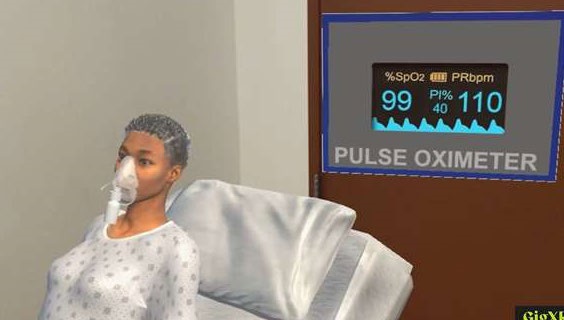
Learners in the same room, wearing Microsoft HoloLens mixed-reality headsets, are able to see each other in real life, while also interacting with a multi-layered, medically accurate holographic patient. This creates a unique environment to learn and practice vital, real-time decision making and treatment choices.
Through the same type of headset, medical instructors are also able to change patient responses, introduce complications and record observations and discussions – whether in person in a teaching group or remotely to multiple locations worldwide, via the internet.
Learners can also watch, contribute to and assess the holographic patient scenarios from Android, iOS smartphone or tablet.
This means true-to-life, safe-to-fail immersive learning can be accessed, delivered and shared across the world, with the technology now available for license to learning institutions everywhere.
Leading the project in Cambridge is Dr Arun Gupta, consultant anaesthetist at CUH and director of postgraduate education at Cambridge University Health Partnership. He said that ‘mixed reality is increasingly recognised as a useful method of simulator training. As institutions scale procurement, the demand for platforms that offer utility and ease of mixed-reality learning management is rapidly expanding.
‘GigXR has already enabled instructors to better prepare learners with medically accurate simulation for observation and assessment. With HoloScenarios, we’re helping to evolve education from a mentorship-based model to one where students around the world can have equal access to top-flight expertise for mastering invention-based clinical skills.’
David King Lassman, the founder of GigXR says that providing a 360-degree view of medically accurate patients ‘represents a milestone for GigXR’ and could provide medical students with more flexible, cost-effective training than traditional methods that require more resources and investments for maintaining labs and hiring patient actors.
Currently, HoloScenarios work with a patient with conditions like asthma, anaphylaxis, pulmonary embolism, and pneumonia. GigXR is also developing other modules for cardiology and neurology conditions.
Hologram doctor to serve pilgrims
Saudi Minister of Health, Fahd Al-Jalajel has launched the Holo-Doctor service, for pilgrims attending this year’s Hajj season, via Madinah International airport.
The service, which offers state-of-the-art technology was made possible through cooperation with the Saudi Telecom Company (STC), allowing patients to be diagnosed by doctors from Seha Virtual Hospital (SVH) in the capital, Riyadh.
Al-Jalajel stated that several services have been linked within this initiative provided by SVH in cooperation with hospitals in Makkah, Madinah, and the Holy Sites. It aims to provide real-time consultations from a virtual team working around the clock within three main specialties: strokes, intensive care, and radiology.
This technology allows the patient to stand in front of the device at the airport and be seen immediately by a doctor hundreds of miles away. Direct two-way interactions allow the physician to view and analyse all of the patient’s vital signs to provide them with needed consultation and medication.
Subscriber content
Read the full article
Full access to Holography & Optical Technology News articles, newsletters and archives.