
Holograms Enhance Efficiency and Precision in 3D Printing
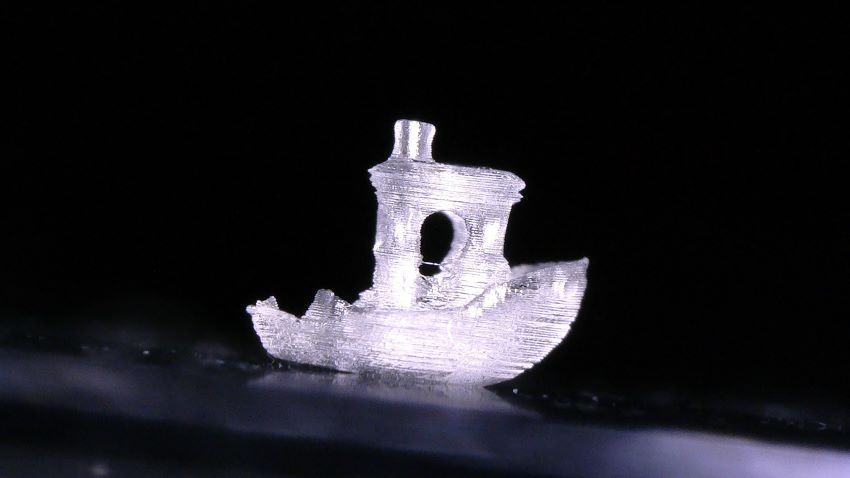
Researchers from EPFL’s Laboratory of Applied Photonic Devices, led by Christophe Moser, in collaboration with Jesper Glückstad’s team at the University of Southern Denmark (SDU), have revealed a breakthrough in 3D printing.
Their new approach, published in ‘Nature Communications’, significantly enhances resolution while reducing energy use by integrating holography into volumetric additive manufacturing.
This method projects a 3D hologram of the object onto a rotating vial of resin. Unlike traditional Tomographic Volumetric Additive Manufacturing (TVAM), which uses light amplitude to encode data, this technique encodes the light phase – its position – leading to major efficiency gains.
‘All pixel inputs contribute to the holographic image across different planes,’ explains Moser. ‘This boosts light efficiency and sharpens spatial resolution, as the patterns can be controlled at various depths.’
Subscriber content
Read the full article
Full access to Holography & Optical Technology News articles, newsletters and archives.