IQ Structures Gets Some Help From AI

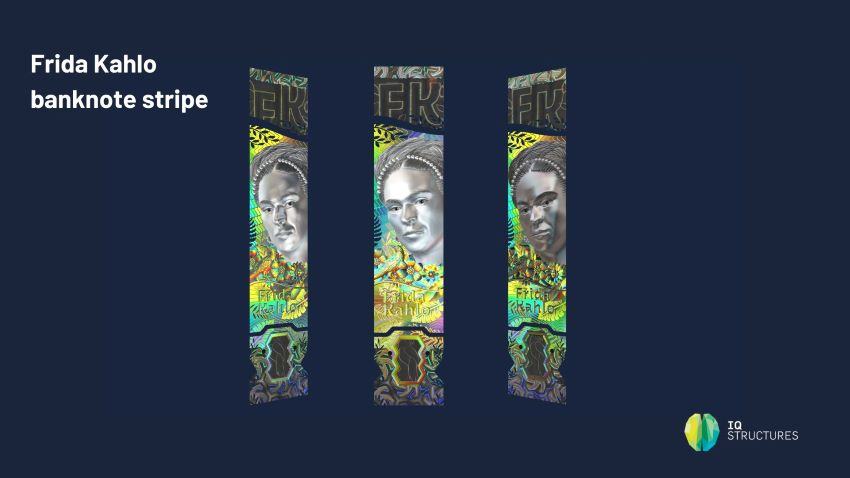
IQ Structures, a research and manufacturing organisation focused on controlled nanostructures, has started using artificial intelligence (AI) to support its creative staff during the design of its DOVIDs (diffractive optically variable image device).
IQ Structures is known to many in the hologram community for creating security features for banknotes and high security documents which combine nano-scale precision with advanced aesthetics to create optical elements that are technically complex but easy to view and authenticate (see HN May 2022). But even the design creatives at IQ Structures, which is a member of the IQS Group, have not been able to ignore the advantages that can be gained from working alongside AI.
The company has already seen the benefits from using at least five functional AI software tools in a number of areas during the design process, including:
Generating multiple proposals and alternatives for particular parts of a DOVID.
Covering large areas with sophisticated and detailed ornaments that would otherwise take weeks.
Writing effective software to control measuring instruments and other auxiliary devices.
Creating advanced concepts and models that allow the customer to make fully informed decisions during the approval process.
As a result, the time required for certain tasks has been reduced by more than half. It is a step into a world where artificial intelligence will liberate human creativity and help designers to create even more beautiful works than before.
Robert Dvorak, Managing Director of IQ Structures, said: ‘our DOVIDs are preferred by customers and win prestigious competitions not only because of our technological edge, but also because behind each one is a creative human being. We don’t want to waste human potential on something that artificial intelligence can do. Every minute an imaginative mind spends on routine tasks is a minute wasted.’
One of the first DOVIDs where these AI possibilities were put into practice is a portrait of Frida Kahlo, the Mexican painter who was well known for her many stylised self-portraits. The sophisticated working of the distinctive features of the painter includes a number of advanced visual effects.
Among them are white 3D bas relief (her face), rainbow 3D bas relief (the inscription ‘Frida Kahlo’), keyhole effects, linear kinetic effects and swap parallax. There is also a combined effect, consisting of a coloured effect in visible light and a hidden part visible only when an adapter is used with monochromatic light. The DOVID, rendered in bold, vibrant colours, also includes machine-readable elements that can be scanned with a mobile phone.
Subscriber content
Read the full article
Full access to Holography & Optical Technology News articles, newsletters and archives.