Holography Gives New Depth to Fingerprint Analysis

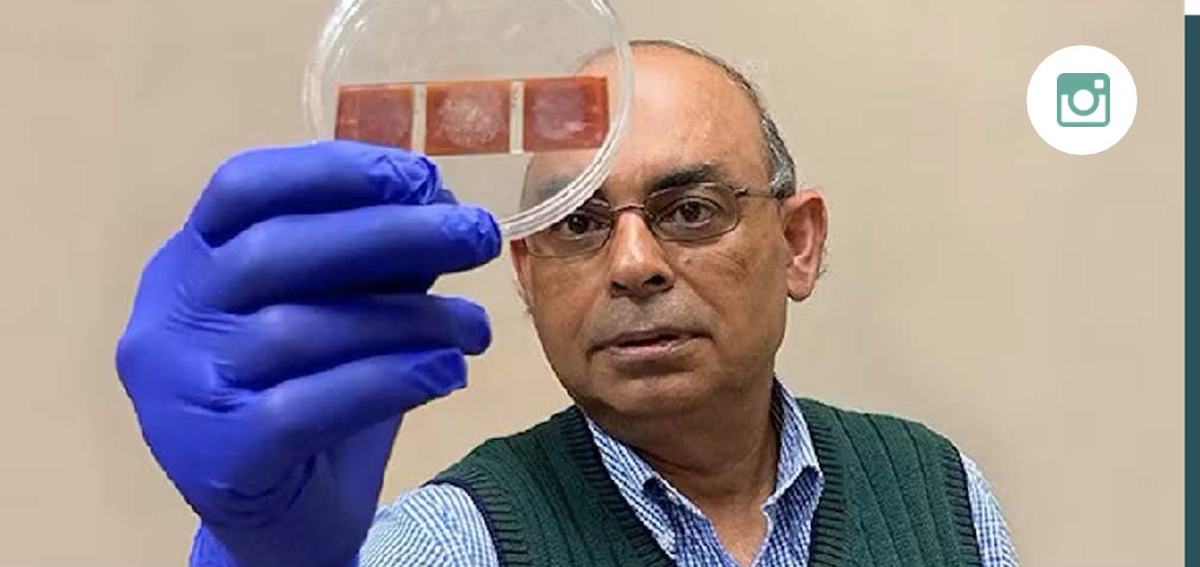
In a ground-breaking departure from conventional fingerprint analysis, recent research introduces a shift in thinking through the collaboration between Penn State and Prof Partha Banerjee of the University of Dayton. This innovative approach leverages advanced holographic techniques, steering away from the traditional reliance on print minutiae and emphasizing ridge orientation. Unconventional markers like curvature and swirl angles are explored, prompting fundamental questions about the nature of fingerprints.
The potential impact on forensic investigations could be significant. According to the developers, the holographic approach, if proven effective, could revolutionise the connection of latent prints from different crime scenes, presenting an alternative to minutiae-based matching and potentially transforming the field of forensic science.
The collaborative effort introduces a novel perspective to fingerprint analysis through advances in 3D holographic techniques. Fingerprints are made up of tiny ridges of oil from your skin. Each ridge is only a few microns tall, or a few hundredths of the thickness of human hair. Traditional approaches often capture fingerprints as 2D images, lacking the depth required for comprehensive spatial analysis. However, this collaboration introduces a revolutionary technique involving nanoscale columnar thin films (CTF) and digital holography to map and visualise fingerprints in three dimensions.
The CTF technique deposits a thin film layer on top of the fingerprint, replicating its 3D structure. Using laser light, researchers create holograms that, when digitally reconstructed, provide a 3D visualisation of the fingerprint. This technique has shown promising results in creating detailed reconstructions of latent fingerprints, revealing microscopic details like pores.
To make a hologram of a 3D fingerprint, researchers split light from a laser into two parts. One part, the reference wave, shines directly on a digital camera. The other wave shines on the object, in this case, the fingerprint. The reflected light is then superimposed on the reference wave, creating an interference pattern, forming the hologram. In digital holography, the interference patterns is imported to a computer where laws of wave propagation are used to reconstruct the object as a 3D picture.
The ongoing work involves depositing hundreds of fingerprints on various surfaces and aging them in different environments before coating them with CTF film to pick up the fingerprint.
Researchers record digital holograms of these fingerprints and visualise them in 3D on a computer. Efforts are underway to develop a robust 3D fingerprint analysis plan to aid in identifying crime suspects.
This research, rooted in the history of fingerprint usage dating back to ancient civilizations, aims to combine traditional knowledge with cutting-edge holographic technologies. As holography opens new dimensions in fingerprint analysis, the future holds promising opportunities for advancements in forensic science and biometric identification systems.
Subscriber content
Read the full article
Full access to Holography & Optical Technology News articles, newsletters and archives.