Could Holographic Police Officers Help Keep the Peace?

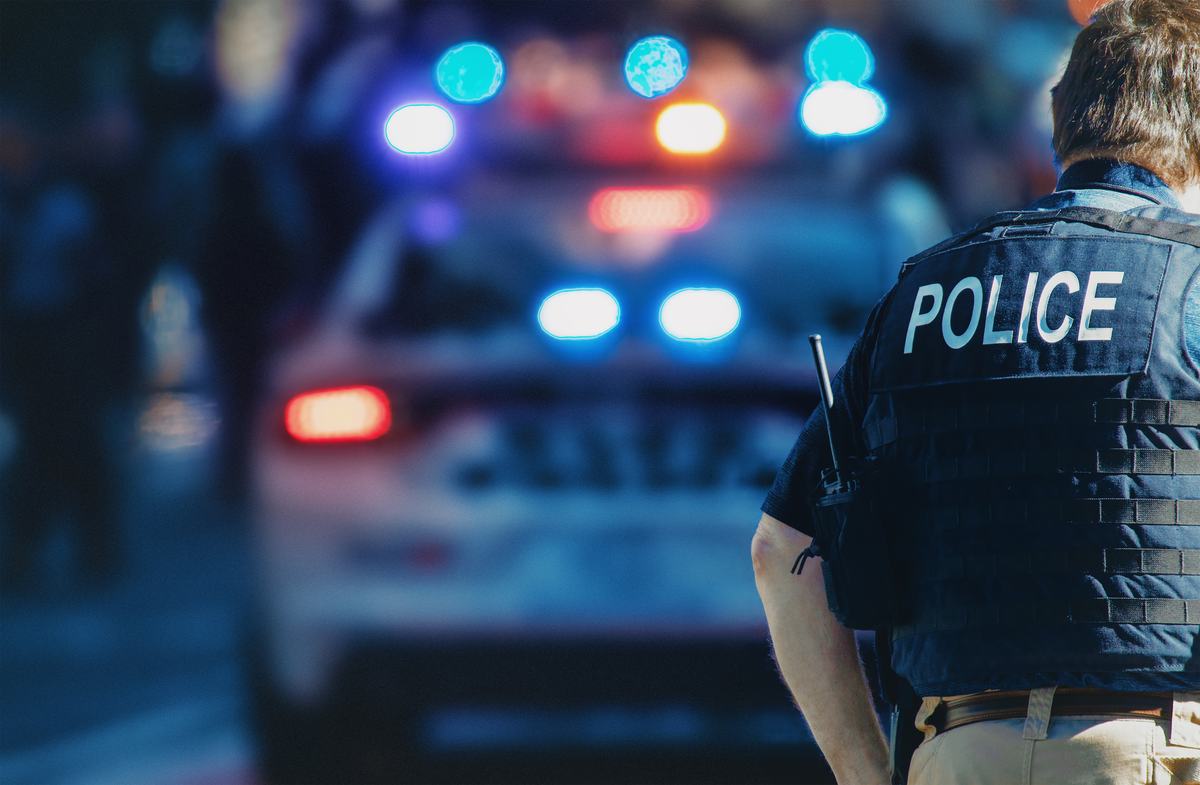
In the 2014 Hollywood movie RoboCop, a detective becomes critically injured and is turned into a cyborg police officer whose programming blurs the line between man and machine. In his on-line opinion piece on the ‘Police1’ platform , Commander Jason Grossini looks to holographic, rather than robotic, police officers to keep the peace.
Holography News® has reported on several proposed staff support roles that might be assisted using holographic projections. Hotel receptionists (HN April 2023), classroom teachers (HN June 2023) and medical training (HN February 2022) have all been suggested as areas where holographic projections of relevant experts might be holo-ported to a remote location to ease resource shortages. But the rationale behind Commander Grossini’s proposal is to distance an officer from hazardous situations and de-escalate potential flashpoints.
‘The holographic officer may have the potential to transform how officers interact with the public, respond to dangerous situations, maintain safety and de-escalate difficult scenes. It could also rekindle the public trust that has deteriorated in recent years,’ according to the Commander.
In the scenario outlined in the article, an officer might get a radio call to respond to an individual disturbing other people in the local park. The dispatcher advises the officer that the subject appears to be highly agitated or possibly under the influence of drugs, prompting the officer to think of using their holographic representation.
Upon arrival at the scene, the officer parks at a safe distance, deploys the holographic platform, manoeuvres the platform into position to communicate with the subject, and projects their holographic representation to assist in resolving the issue.
In theory, the officer could quickly and safely de-escalate the situation, calm the subject and reduce the chance of having to use force by doing all of this at a safe distance.
Barriers to use
The article acknowledges that holographic technology has some barriers to immediate adoption, namely cost and size. The cost of holographic technology varies depending on its type and complexity. Costs can range from a few hundred dollars for basic displays to several million for advanced systems.
One of the factors that contributes to the cost is the hardware required to create and display the holographic images. This includes high-resolution cameras, projectors and specialised software capable of capturing and processing large amounts of data in real-time, as well as transmitting and displaying solid and life-like images. All of this equipment adds to the overall size and manoeuvrability of holoportation systems.
But there have been significant advances in both cost and size in recent years. Several holoportation companies are working on reducing the overall foot-print of their system down from the size of an old-fashioned telephone booth to the size of a mini fridge.
Once portable and affordable holoportation systems emerge, another challenge will be the need for more training and education. The holographic officer, even when field-ready, will be a complex and sophisticated technology, and officers will need to be trained to use it effectively. This will require significant investment, as well as ongoing support and maintenance.
But according to Commander Grossini, the benefits of fewer instances of force used by officers and greater public support will make these efforts worthwhile.
Subscriber content
Read the full article
Full access to Holography & Optical Technology News articles, newsletters and archives.