SAFEGUARD Polymer Shine Spotlight on The Caribbean

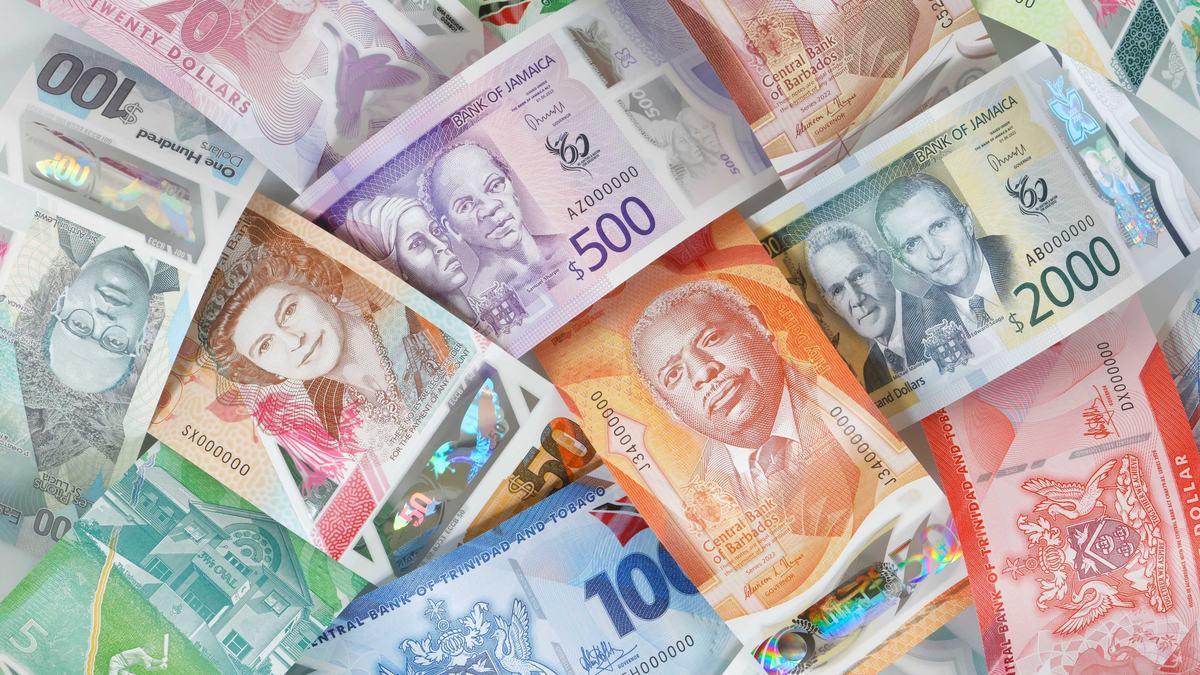
Over the course of the past four years, four currency series in the Caribbean have converted to polymer – starting with the East Caribbean dollar in 2019, followed by Trinidad & Tobago in 2020, then Barbados in 2022 and, most recently, Jamaica this summer. With the exception of the Trinidad & Tobago series, they all feature holograms on the higher denominations.
At the High Security Printing (HSP) Latin America conference in the Bahamas in June, Gareth Evans of De La Rue – the supplier of the SAFEGUARD® substrate and the designer and printer for all four series – took delegates through the rationale, the implementation, and the results to date of polymer in the region.
The four currencies that have recently converted to SAFEGUARD cover 11 countries, four central banks and 5.5 million people. The rationale for the conversion was to do with the central banks wanting more durable notes to ensure they stayed cleaner for longer and reduce replacement rates and overall costs. It also has the secondary benefit of being a friendly substrate for holograms.
Polymer banknotes are typically made from a thin, flexible plastic material – usually biaxially oriented polypropylene (BOPP). The material is extruded in a clear form and then finished with a layer of a varnish to create a smooth finish. The surface smoothness creates the conditions for specular rather than the diffuse interaction of light that you find on materials such as paper. The sharper and more legible diffractive features that this creates enhances visibility and the complexity of holographic features on polymer banknotes, and serve to improve deterrence against counterfeiting.
The knock-on effect of polymer banknotes being more durable than paper banknotes is that they are resistant to wear and tear, such as creasing and tearing, which can distort or damage holographic features. The longevity of polymer notes ensures that the holograms remain in better condition over time.
The three highest denomination notes in the East Caribbean dollar series (the $20, $50 and $100) feature a holographic stripe in the clear window, as do those of Jamaica (the $1,000, $2,000 and $5,000), the photo-reaslistic portraits in which are created with a combination of DEPTH™ and PUREIMAGE™ effects.
De La Rue’s holographic SPOTLIGHT™ feature was used in the windows of the three highest denomination Barbadian notes (the $20, $50 and $100) to bring added security anda secure animation to the country’s national symbols.
A selection of denominations
SPOTLIGHT offers two images that appear to rotate above and below the plane of the hologram and move intuitively in response to being tilted. It also offers an authentication response without moving the hologram – under diffuse light the images appear more blurred and under torchlight from a smartphone the images sharpen. This allows protection checks by sharing a photograph.
The notes are already receiving public acclaim and industry recognition. The Eastern Caribbean Central Bank’s banknotes were named Best New Series at the HSP LatAm event in 2022, and the new Barbados series won the same award in 2023. Several of the notes from across all four have also been nominated for the International Association of Currency Affairs (IACA) and International Bank Note Society (IBNS) awards.
Subscriber content
Read the full article
Full access to Holography & Optical Technology News articles, newsletters and archives.