
WiMi Hologram Cloud Builds Ultra-Thin Display System

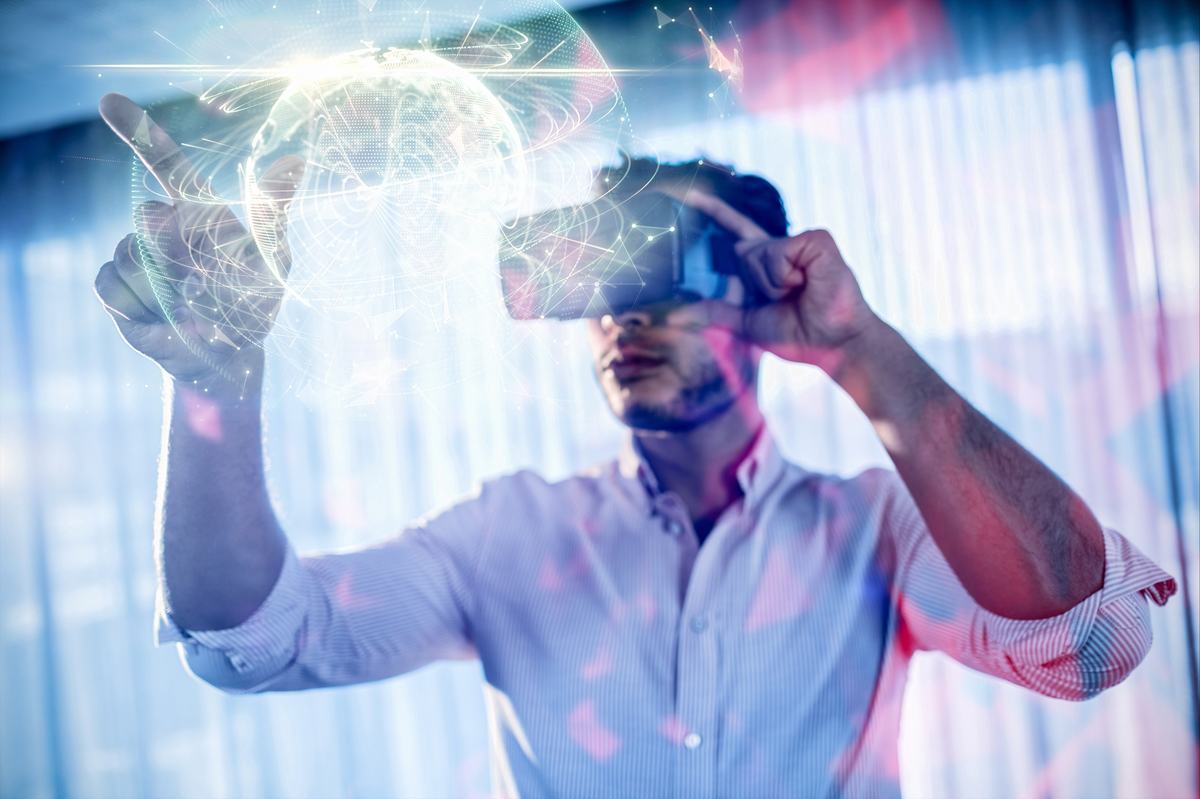
Holographic displays allow the projection of apparently 3D images in space without the need for special eyewear. They can use a variety of optical methods to create the illusion of solidity and depth, allowing viewers to perceive objects or scenes as if they were real and existing in the physical space before them.
But, according to WiMi Hologram Cloud, conventional holographic display technology is limited by narrow viewing angles, bulky optical components, and a lack of dedicated hologram computing capabilities, which leads to the slow processing speeds of holograms.
To overcome these limitations, WiMi has announced the development of an ultra-thin interactive panel holographic display system based on its steering backlight unit (S-BLU) and an internal holographic video processor.
According to WiMi, its S-BLU greatly expands the viewing angle, and its diffractive waveguide architecture enables a slim display profile. The holographic video processor computes high-quality holograms in real-time on a single chip.
The display’s optical architecture consists of a beam deflector, a coherent backlight unit, a geometric phase lens, and a spatial light modulator (SLM). The principle is a coherent backlight unit configuration using waveguides: the first waveguide for the red and green light and the second waveguide for blue light are stacked together to improve the overall efficiency.
The system updates the 3D image based on the position of the viewer's eyes as detected by the eye-tracking sensors. A graphics rendering or 3D holographic camera generates a corresponding 3D holographic digital image.
Based on the image on the retinal plane, the holographic digital image processor calculates the light field distribution on the eye lens plane. Then, based on the light field distribution on the eye lens, the optimal pattern of the SLM is calculated to generate high-quality holographic images for the application and match the optimal viewing angle.
WiMi believes its ultra-thin panel holographic display systems can be used to create eye-catching advertising and promotional displays.
In a separate announcement, WiMi has added finger gesture control to the operation of the holographic display system. Users can intuitively process electronic holograms in real-time through finger gesture movements detected by motion sensors. After detecting the finger gesture movement, the system generates a 3D object composed of point clouds and calculates the computer-generated hologram (CGH) of the 3D object or scene.
Subscriber content
Read the full article
Full access to Holography & Optical Technology News articles, newsletters and archives.