
The Making of a Mona Lisa Hologram

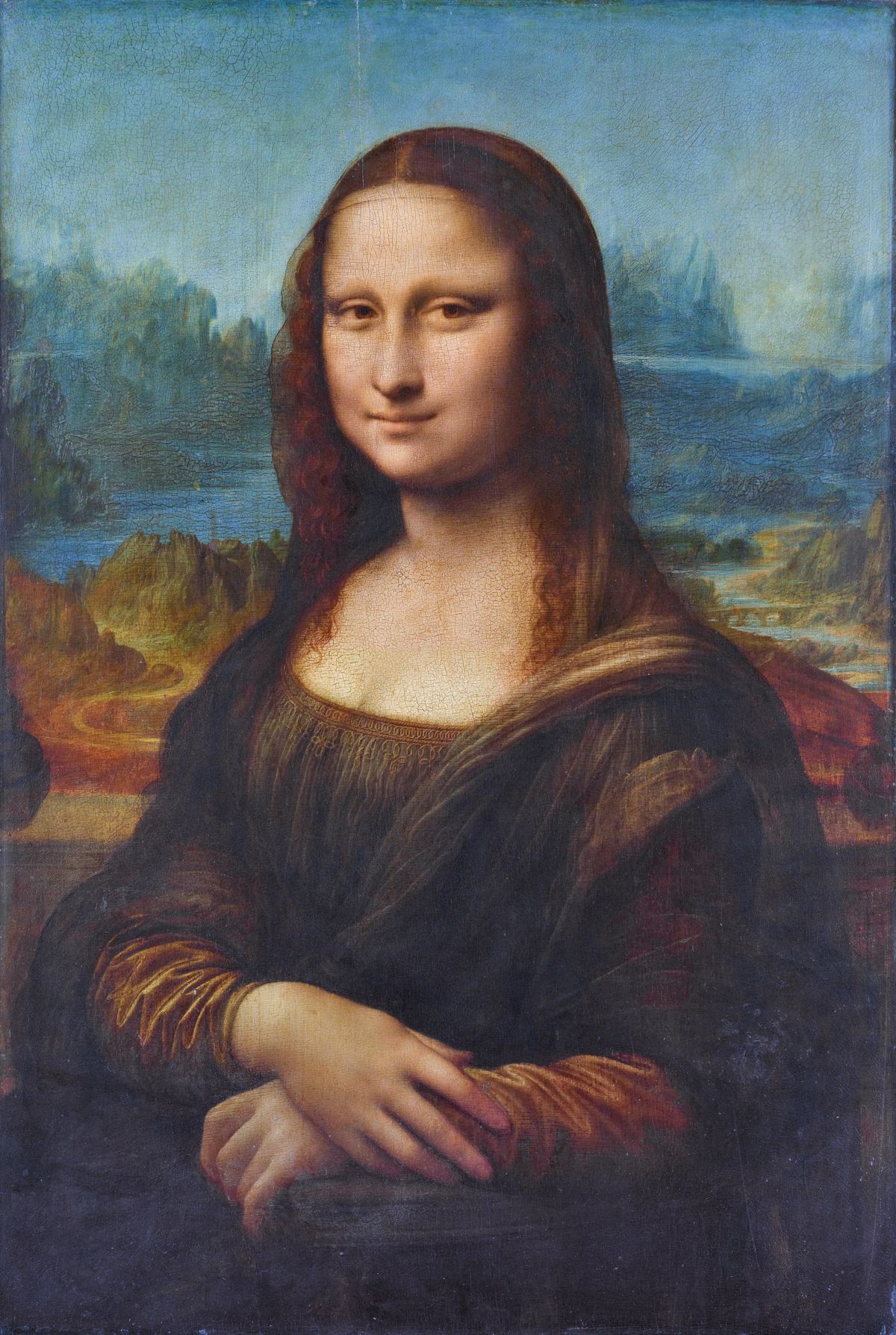
Leonardo da Vinci’s portrait of the Mona Lisa is one of the most readily recognisable works in western art. A group of research institutes 1 have now collaborated to develop an acoustic metasurface-based holography technique that uses a deep learning algorithm to generate and iteratively improve a hologram of the portrait.
‘A metasurface-based hologram works by precisely controlling the phase and amplitude of the waves interacting with the metasurface’, said researcher Yue-Sheng Wang. ‘As a result, the outgoing waves at each pixel exhibit a certain amplitude and phase, which results in the desired holographic image based on their interference.’
The team wanted to develop a metasurface holography optimisation method to enhance efficiency and precision. They used a deep neural network-based algorithm to customise the structures within their metasurface. By iteratively reducing inconsistencies between the original and holographic image, they tweaked the metasurface and created a high-quality hologram.
‘We chose to recreate the Mona Lisa as a proof of concept,’ said Wang. ‘It is so famous that almost everyone knows about it. It is filled with countless delicate and subtle transitions of layers, which enhances the softness, haziness, and mystery of the painting. So it is a great way to demonstrate the effectiveness of our method.’
The holographic method successfully reconstructed the Mona Lisa, and, in even more detail, her left eye. While the Mona Lisa hologram is two-dimensional, the technique can be extended to create three-dimensional images as well.
‘The precise control of sound waves offered by our holography method is crucial for advancing non-invasive medical therapies, effective noise control, and optimising acoustic environments like concert halls, said Wang.
‘These improvements have the potential to enhance quality of life and various technological applications.’
The authors, whose work is published in Applied Physics Reviews 2, believe their technique could impact the field of holography. They plan to explore ways to generalise it, make it compatible with 3D printing, and reduce training time.
1 - Tianjin University, the Beijing Institute of Technology, Rowan University, the University of Missouri, Qingdao University, Shijiazhuang Tiedao University, and Beijing Jiaotong University.
Subscriber content
Read the full article
Full access to Holography & Optical Technology News articles, newsletters and archives.